
MEPCO is one of the leading construction and contracting companies in Saudi Arabia. Established in 1420 AH, the company has been steadily progressing to keep pace with the rapid urban development witnessed in the Kingdom.
MEPCO is one of the leading construction and contracting companies in Saudi Arabia. Established in 1420 AH, the company has been steadily progressing to keep pace with the rapid urban development witnessed in the Kingdom.


 MEPCO
MEPCO
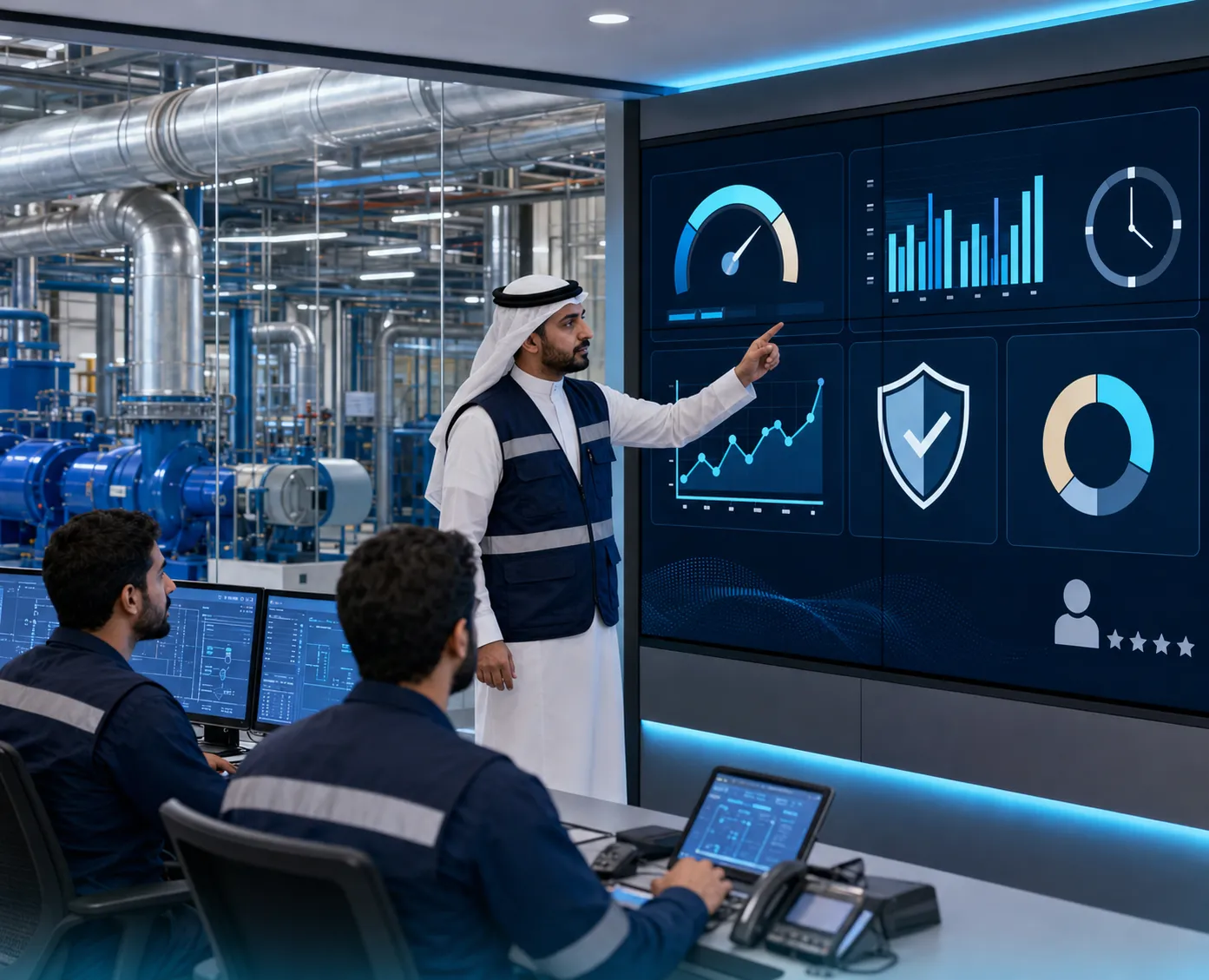
In industrial facilities and manufacturing plants, the success of operations and maintenance activities does not depend only on how quickly failures are repaired, but also on the ability to continuously measure performance and analyze results. The more capable a facility is of monitoring equipment efficiency, maintenance quality, and response times, the better it can reduce downtime and improve productivity.
For this reason, Operations and Maintenance Performance Indicators have become one of the most important tools used by industrial companies, O&M contractors, and consultants to evaluate service quality and ensure that maintenance plans are achieving their intended objectives.
These indicators provide a clear overview of asset and equipment conditions, measure the commitment of maintenance teams to preventive maintenance plans, identify recurring failure causes, and support the development of long-term solutions instead of relying only on temporary fixes.
What Are Operations and Maintenance Performance Indicators?
Operations and Maintenance Performance Indicators are a set of measurable criteria used to evaluate the efficiency of operations and maintenance processes within different facilities.
These indicators rely on collecting and analyzing data related to equipment, maintenance activities, failure reports, and the implementation of operational plans to determine the overall effectiveness of the system.
The importance of these indicators is not limited to tracking the number of failures only; they help answer several critical questions, such as:
Through this data, management teams can make more accurate decisions and improve overall operational performance.
Why Should Operations and Maintenance Performance Be Measured Monthly?
Monthly monitoring of performance indicators allows facilities to identify issues at an early stage before they develop into major failures that affect production or increase operational costs.
For example, an increasing failure rate in specific equipment over several months may indicate an underlying issue that requires a permanent solution, such as replacing certain components or modifying the maintenance strategy.
Monthly reports also help in:
Therefore, many industrial facilities rely on performance indicators as an essential part of managing operations and maintenance contracts.
Key Operations and Maintenance Performance Indicators to Monitor Monthly
The required indicators vary depending on the nature of the facility and the type of equipment in use. However, there are several essential indicators that serve as important benchmarks for evaluating the quality of operations and maintenance activities.
Response time is one of the most important Operations and Maintenance Performance Indicators, as it reflects the team’s ability to handle issues immediately when they occur.
This indicator measures the time between reporting a failure and the arrival of the specialized team to begin inspection and repair activities.
A shorter response time helps to:
In industrial plants and manufacturing facilities, a delay in handling a minor failure can lead to the shutdown of an entire production line. Therefore, response time is a key factor when evaluating the performance of O&M contractors.
Improving this indicator does not depend only on faster response but also requires a clear system for receiving requests, prioritizing issues, and ensuring that qualified technical teams are available when needed.
Repairing a failure once does not necessarily indicate successful maintenance, as repeated failures usually point to an underlying issue that has not been properly addressed.
The recurring failure rate measures how often the same problem occurs within a specific period and helps identify equipment that requires improvement or further evaluation.
Common causes of recurring failures include:
Analyzing this indicator helps O&M teams move from corrective maintenance toward proactive maintenance strategies that prevent failures before they occur.
Preventive maintenance is one of the most important elements for maintaining equipment reliability, as it focuses on performing inspections and maintenance activities according to a scheduled plan before failures occur.
This indicator is measured by comparing the number of preventive maintenance tasks completed against the planned tasks during the month.
Preventive maintenance activities include:
A high preventive maintenance compliance rate indicates that the facility operates according to an organized system that reduces reliance on emergency repairs and helps maintain asset efficiency for longer periods.
Operations and maintenance activities should not be evaluated only by the number of completed tasks, but also by the quality of the results achieved.
Operations and maintenance quality includes several key elements, such as:
A large number of maintenance activities may be completed during the month, but if these activities do not improve equipment performance or reduce failures, the overall quality level still requires improvement.
Monthly reports are among the most important tools used by management teams to monitor performance levels and make informed decisions.
The importance of these reports is not limited to documenting completed activities; they provide a comprehensive analysis of the facility’s condition during the previous period.
Operations and maintenance reports usually include:
Accurate reports help facility owners and consultants evaluate contractor performance and ensure that required contract performance indicators are being achieved.
Mean Time to Repair (MTTR) is an indicator that measures the time required for equipment to return to operation after a failure occurs.
The lower the MTTR, the more efficient the maintenance team is in diagnosing problems and restoring equipment operation quickly.
This indicator is affected by several factors, including:
Improving MTTR helps reduce downtime losses and increase operational continuity.
Mean Time Between Failures (MTBF) is used to measure the average operating time between equipment failures and is considered one of the key indicators for evaluating equipment reliability.
A higher MTBF value means that equipment operates for longer periods before experiencing new failures, indicating more effective operations and maintenance programs.
This measurement helps in:
How Do Performance Indicators Improve Facility Management?
In large industrial facilities, facility management depends on having a clear performance monitoring system, as any decline in operational efficiency can directly impact production and costs.
Performance indicators help achieve:
Better Decision-Making
Instead of relying on assumptions, decisions are made based on actual data and accurate performance reports.
Reduced Operating Costs
By identifying problems early and minimizing unexpected failures.
Improved Equipment Efficiency
Through continuous performance monitoring and developing appropriate improvement plans.
Better Relationship Between Facility Owners and Contractors
Because all parties rely on clear and measurable performance standards.
Mepco’s Role in Applying Operations and Maintenance Standards
Mepco follows a structured approach in managing operations and maintenance activities within industrial facilities by monitoring performance through clear measurement indicators that help improve equipment efficiency and reduce downtime.
The working methodology includes:
Through this approach, Mepco helps industrial companies achieve more stable operations, extend equipment life cycles, and reduce operational risks.
Frequently Asked Questions About Operations and Maintenance Performance Indicators
What are the most important Operations and Maintenance Performance Indicators?
The most important indicators include failure response time, recurring failure rate, preventive maintenance completion rate, operations and maintenance quality, and Mean Time to Repair (MTTR).
Why are monthly reports important in operations and maintenance contracts?
Because they provide clear performance data, help identify problems, and support the continuous improvement of operations and maintenance plans.
How can operations and maintenance performance be improved?
Performance can be improved by monitoring key indicators, analyzing failure causes, implementing preventive maintenance strategies, and improving work procedures.
Request an Operations and Maintenance Quality Assessment with Mepco
Continuous monitoring of Operations and Maintenance Performance Indicators helps industrial facilities improve efficiency, reduce failures, and maximize the value of equipment and assets.
If you are looking for an experienced partner in operations and maintenance management and quality implementation within industrial facilities, contact Mepco to benefit from operational solutions based on measurement, analysis, and continuous improvement.