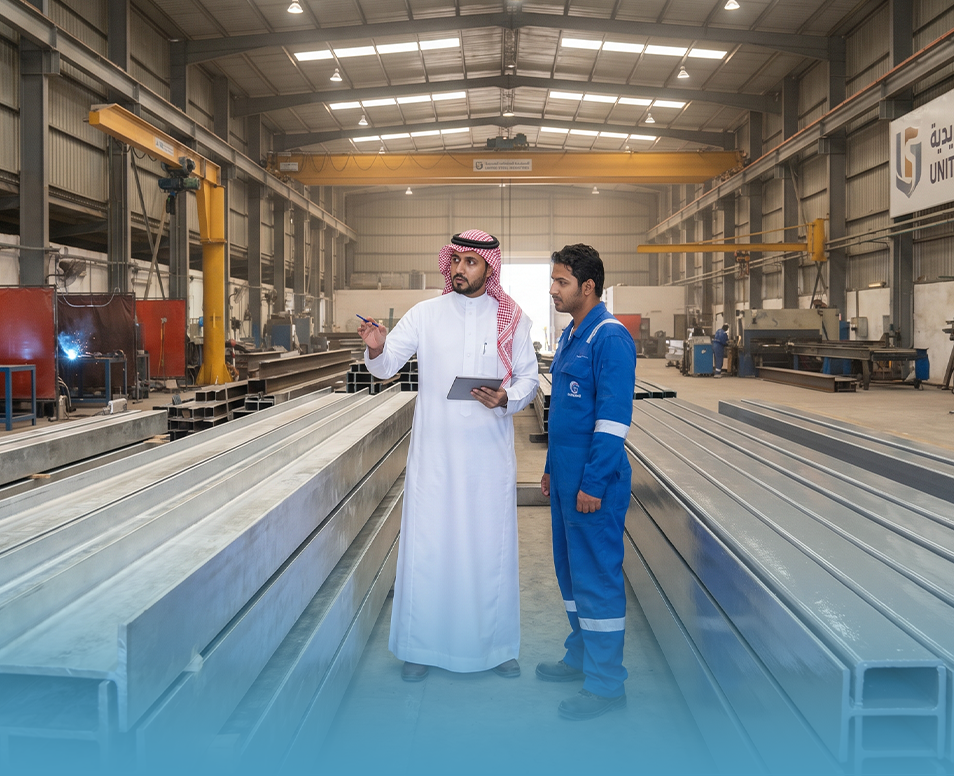
If you work in metal fabrication or oversee welding activities, the real challenge isn’t “whether to inspect”—it’s “when to inspect and how to interpret the report.” This guide gives you practical NDT inspection steps for welds, helping you make the right decisions and understand inspection results without complexity.
When Should You Request NDT Inspection for Welds?
Request inspection before the final closure of any weld joint that impacts safety or operation—ensuring early defect detection and avoiding costly rework.
Do this:
- Request inspection immediately after welding is completed and before painting or coating
- Request inspection when changing the execution team or welding method
- Request inspection if there have been prior quality issues on the project
- Request inspection before final handover or commissioning
Don’t wait for problems to appear. Early inspection reduces disruption and prevents incorrect decisions later.
Types of NDT for Welds: What to Choose and When?
Select the inspection method based on the nature and location of the weld—ensuring accurate detection without interrupting workflow.
Do this:
UT (Ultrasonic Testing)
- Use it to assess internal integrity of the weld
- Use it when depth evaluation—not just surface—is required
- Use it for critical or heavy-duty applications
MT (Magnetic Testing)
- Use it to detect visible surface and near-surface defects
- Use it immediately after surface cleaning
- Use it during fast-paced execution stages
PT (Penetrant Testing)
- Use it for detecting fine surface defects with high precision
- Use it before painting or applying any coating
- Use it in final inspection stages
If unsure, start with surface inspection, then move to deeper testing when needed.
How to Read an NDT Weld Inspection Report
Read the report with one goal: make a decision—accept, repair, or rework—without delays.
Do this:
- Verify the defect location in the report
- Compare the defect location with drawings
- Review the defect description: surface or internal
- Check the inspector’s recommendation: accept or repair
Don’t read the report as text only—connect it to the actual site conditions.
Common Mistakes in Weld Inspection
Avoid these mistakes to prevent delays and rework—ensuring faster delivery and higher quality:
- Don’t postpone inspection until the end of the project
- Don’t rely on a single inspection method for all cases
- Don’t ignore “conditionally accepted” reports
- Don’t proceed with repairs without re-inspection
The most costly mistake is not the inspection itself—but ignoring its results.
Integrating NDT with Project Quality Management
Link inspection to your quality plan from the beginning—ensuring a structured system instead of reactive decisions.
Do this:
- Establish a clear inspection schedule for each phase
- Align inspection with inspection & test plans (ITPs)
- Document every inspection result and link it to location
- Use findings to improve execution in subsequent stages
To see how inspection is integrated with execution in a unified system, explore our metal fabrication services.
Managing Weld Inspection Within a Full Project
Incorporate inspection into the execution plan—not as a separate phase—reducing conflicts and accelerating delivery.
Do this:
- Coordinate between execution and inspection teams
- Define hold points for inspection within the schedule
- Review inspection results daily—not in batches
- Align inspection outcomes with final handover plans
For large-scale projects involving multiple disciplines, explore our project management and operations services to understand how inspection and quality are integrated across the full project lifecycle.
Our Core Services
We deliver integrated contracting, fabrication, and project management solutions—for clients who require reliable execution and deliverable results.
MEP Contracting
Installation of mechanical, electrical, and plumbing systems
Integrated execution ensuring stable operation without clashes
Industrial Fabrication
- Steel structure fabrication
- Manufacturing aligned with project specifications
Piping & Pressure Vessels
Precision fabrication linked to inspection and quality plans
Project Management & Operations
EPC support and turnkey delivery
Full lifecycle management—from concept to handover—with clear reporting
Industries We Serve
We support sectors that require high-quality execution—delivering tailored solutions for each operational environment:
- Oil & Gas
- Power Generation & Utilities
- Commercial Construction & Infrastructure
Why Choose MIBCO?
We deliver execution driven by field expertise and full documentation—for clients who require verifiable quality.
Leadership
[Name] — Managing Director, PMP® certified / Saudi Council of Engineers
Over 15 years of experience delivering high-quality MEP and industrial projects for oil & gas, energy, and infrastructure sectors across Saudi Arabia
Our methodology includes:
- ISO 9001 Quality Management standards
- ISO 45001 Health & Safety standards
- Full documentation of all fabrication and inspection activities
Featured Projects
We deliver industrial and infrastructure projects requiring high standards—ensuring reliable, operational outcomes.
Project scope includes:
- Integrated metal fabrication works
- Infrastructure projects
- Industrial facility developments
Frequently Asked Questions About NDT for Weld Inspection
Q: What services does MIBCO provide?
A: We specialize in MEP contracting, industrial fabrication, steel structure manufacturing, project management, and maintenance services. Each service includes design support, material supply, installation, and commissioning—aligned with your project scope and Saudi regulatory requirements.
Q: Which industries do you serve?
A: We focus on oil & gas, petrochemicals, power generation, water treatment, commercial construction, and infrastructure projects across the Kingdom. Our teams understand technical specifications, safety protocols, and compliance requirements unique to each sector.
Q: Do you handle projects end-to-end?
A: Yes. We manage the full project lifecycle—from initial design consultation and procurement to fabrication, installation, testing, and final handover. You benefit from a single point of contact and transparent progress reporting.
Q: When was MIBCO established and where are you based?
A: MIBCO was established in [Year] and is headquartered in [City], Saudi Arabia, with fabrication facilities and project teams serving clients nationwide.
Q: Do you work with both public and private sectors?
A: Yes. We deliver projects for government entities and private clients across Saudi Arabia, handling all regulatory submissions, compliance documentation, and stakeholder coordination.
Q: Can you handle fast-track or urgent projects?
A: Yes. We offer accelerated delivery solutions for time-sensitive projects—while maintaining strict quality control, safety standards, and documentation protocols.
Q: Do you provide post-project support?
A: Yes. We provide maintenance contracts, spare parts supply, and technical support for completed projects. Our service teams respond to critical issues within 24 hours.



 MEPCO
MEPCO